


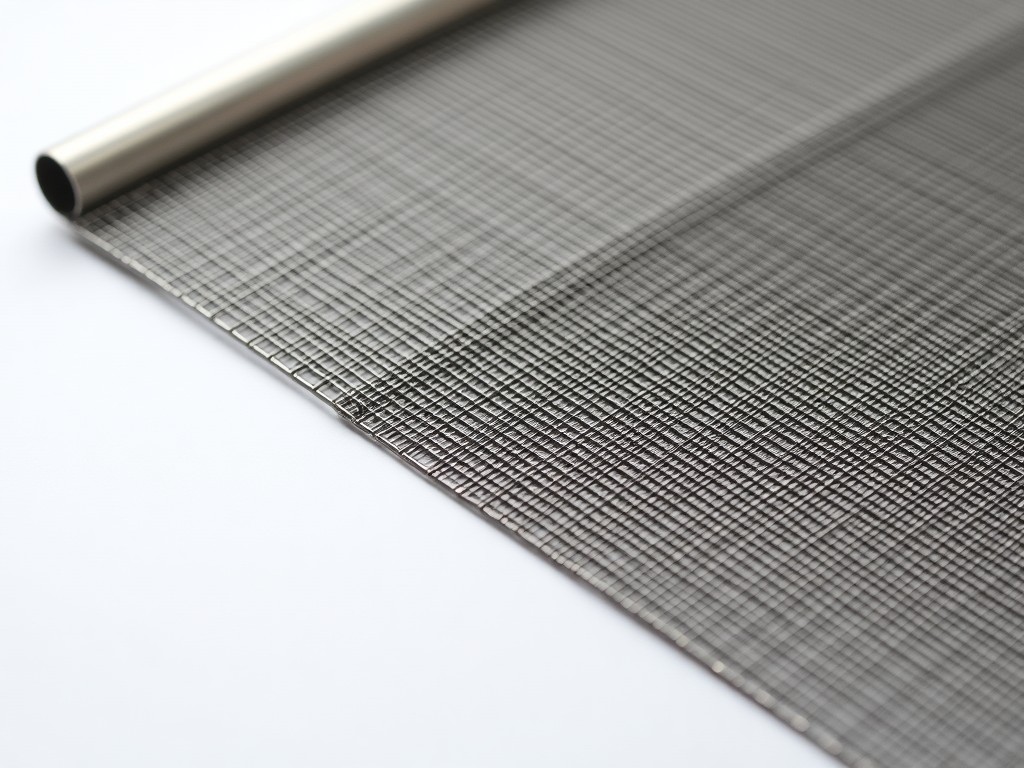
Stainless Steel Wire Mesh Filter Metal Mesh Sheet Panels
Stainless Steel Wire Mesh Filter Metal Mesh Sheet Panels
Stainless steel wire mesh filter panels are engineered filtration components formed by weaving or welding corrosion-resistant stainless steel wires into precise, uniform openings. These panels function as primary or secondary barriers in fluid and gas separation systems, where mechanical strength, chemical inertness, and consistent pore geometry are critical. Unlike polymeric or synthetic alternatives, stainless steel mesh maintains structural integrity under elevated temperatures, cyclic pressure loads, and exposure to aggressive media, making it suitable for continuous industrial operation.
The performance of these panels depends on four interrelated parameters: wire diameter, opening size (mesh count), weave pattern, and alloy composition. Wire diameter influences tensile strength and clogging resistance; opening size determines particle retention efficiency; weave pattern affects flow dynamics and cleaning accessibility; alloy selection governs resistance to specific corrosives such as chlorides, acids, or alkalis. Engineers select combinations of these variables to match process conditions, balancing filtration precision with pressure drop and service life.
Material Selection and Corrosion Resistance
The most commonly used alloys for industrial wire mesh filters are AISI 304 and 316L stainless steel. Grade 304 offers adequate resistance to atmospheric oxidation, mild acids, and alkaline solutions at temperatures below 400°C, making it suitable for food processing, HVAC, and general chemical transfer. Grade 316L, with added molybdenum, provides superior resistance to pitting and crevice corrosion in chloride-containing environments, such as seawater, brine systems, or pharmaceutical washdowns, and is preferred in marine, chemical, and sanitary applications where cleanability and longevity are paramount.
For extreme conditions, specialized alloys like 904L, duplex 2205, or nickel-based grades (e.g., Hastelloy, Inconel) may be specified. These materials resist sulfuric acid, nitric acid, or high-temperature oxidation but involve higher material costs and more complex fabrication. Selection is not based on general "corrosion resistance" but on compatibility with the specific process fluid, temperature, concentration, and exposure duration. Mill test reports (MTRs) verifying chemical composition and mechanical properties are standard documentation for critical applications.
Weave Patterns and Structural Characteristics
The three primary weave patterns—plain square, twill, and Dutch weave—each produce distinct hydraulic and mechanical behaviors. Plain square weave features symmetric wire intersection at 90-degree angles, offering balanced flow in both directions and ease of cleaning, making it ideal for low-viscosity fluids and screen protection. Twill weave, where each wire passes over two and under two adjacent wires, provides greater strength and finer effective filtration than plain weave at the same wire diameter, due to tighter nesting and reduced straight-through paths.
Dutch weave utilizes a larger diameter warp wire and finer weft wire, creating a dense, tapered filter structure with high dirt-holding capacity and excellent particle retention, often used in coalescing or precision filtration where sub-micron efficiency is required. The asymmetric flow resistance in Dutch weave results in higher pressure drop but superior solids capture. Mesh count (openings per linear inch) and wire diameter together define the actual micron rating; for example, a 200x200 mesh with 0.05mm wire yields approximately 75μm nominal opening, while a 400x400 Dutch weave may achieve<10μm effective="" retention="" despite="" higher="" nominal="" count.="">
Typical Industrial Applications
In petrochemical refining, stainless steel mesh panels serve as catalyst retainers in fixed-bed reactors, where they must withstand temperatures exceeding 500°C and resist sulfidation from hydrocarbon streams. The mesh prevents catalyst fines from migrating into downstream equipment while allowing uniform gas distribution. Failure here risks reactor hot spots, pressure surges, or product contamination, necessitating materials with verified creep resistance and oxidation stability at temperature.
In pharmaceutical manufacturing, these panels are used in liquid filtration systems for active ingredient isolation, where biocompatibility and cleanability are non-negotiable. 316L mesh with electropolished finish minimizes protein adsorption and facilitates CIP/SIP procedures. The absence of extractables or leachables is validated through USP<87>and<88>testing, and surface roughness is typically controlled to Ra<0.4μm to="" prevent="" microbial="" harborage.="">
In water treatment, mesh panels act as pre-filters for reverse osmosis membranes, removing suspended solids that would otherwise cause fouling. Here, the design prioritizes open area percentage (often >40%) to minimize pressure drop while retaining particles >10μm. Backwash compatibility is essential; the mesh must resist deformation during hydraulic reversal and retain dimensional stability after thousands of cycles.
In aerospace and power generation, fine mesh panels function as bleed air filters or lubricant strainers, where reliability under vibration and thermal cycling is critical. These applications often require dual certification—material traceability to AMS or ASTM standards and non-destructive testing (e.g., ultrasonic or eddy current) to detect wire breaks or weld defects before installation.
Customization and Fabrication Options
Panels are fabricated to exact customer specifications, with no standard stock sizes imposed. Dimensions can range from small precision discs (<25mm diameter="">
Surface modifications enhance performance beyond base material properties. Electropolishing removes embedded contaminants and micro-burrs, improving corrosion resistance and cleanability. Passivation (per ASTM A967) enhances the passive chromium oxide layer after welding or forming. For applications requiring anti-static properties or improved wettability, conductive coatings or hydrophilic treatments may be applied, though these are evaluated case-by-case for compatibility with process media.
Integration features such as perforated support grids, diffusion layers, or bonded gaskets can be incorporated during fabrication to simplify assembly. For example, a stainless steel mesh layer may be laminated to a perforated backing plate to prevent deformation under high differential pressure, or a PTFE gasket may be co-molded into the flange face to ensure leak-tight sealing without additional components. All custom features are defined in engineering drawings and validated through first-article inspection.
Quality Control and Testing Protocols
Quality assurance begins with raw material verification, where each coil of wire is accompanied by an MTR confirming alloy composition, tensile strength, and elongation. Incoming wire undergoes diameter tolerance checks (±0.01mm for precision grades) and visual inspection for surface defects such as pits, scratches, or oxidation. During weaving or welding, tension and alignment are monitored to ensure uniform opening dimensions across the entire panel.
Post-fabrication inspection includes bubble point testing to verify pore integrity and maximum pore size, particularly for critical filtration applications. Airflow resistance measurements establish clean pressure drop characteristics, allowing comparison against design specifications. For sanitary or pharmaceutical use, surface cleanliness is validated via wipe testing for particulates and non-volatile residue (NVR), with acceptance criteria often set below 10mg/m². Dimensional inspection confirms flatness, squareness, and edge conformity using calibrated CMMs or optical comparators.
For pressure-containing applications, hydrostatic or pneumatic leak testing is performed at 1.5x design pressure. Fatigue testing may be conducted on representative samples to simulate cyclic loading conditions. All test results are traceable to the specific panel via unique serial numbers, and documentation packages include material certifications, test reports, and conformity statements aligned with ISO 9001, ASME Section VIII, or customer-specific QA requirements.
Packaging and Logistics Considerations
Panels are packaged to prevent mechanical damage and environmental exposure during transit. Flat sheets are separated by interleaving sheets of polyethylene or kraft paper and stacked on wooden pallets with edge protection. For thin or large-format panels, custom corrugated or double-wall cardboard crates are used to resist bending and impact. Humidity-indicating cards and desiccant packs are included for shipments to humid climates to mitigate surface staining or light oxidation during storage.
Export shipments comply with ISPM 15 for wooden packaging and include fumigation certificates where required. Each package is labeled with part number, material grade, dimensions, heat number, and handling instructions (e.g., "Keep Dry," "Do Not Bend"). For high-value or precision components, shock indicators and tilt sensors may be affixed to detect mishandling. Delivery terms (EXW, FOB, CIF) and lead times are confirmed at quotation, with standard production typically ranging from 2–4 weeks for stock alloys and 6–8 weeks for specialty grades, depending on complexity and current capacity.
Inquiry and Technical Support
To initiate a quotation or technical review, provide the following information: intended fluid or gas composition, operating temperature and pressure range, required particle retention size (micron or mesh), maximum allowable pressure drop, panel dimensions and shape, edge treatment or framing needs, and any applicable industry standards (e.g., FDA, 3-A, ASME, ASTM). Additional details such as cleaning method (CIP, backwash, ultrasonic), vibration exposure, or regulatory certification requirements enable accurate material and design recommendations.
Our engineering team evaluates each request against material compatibility charts, flow dynamics models, and fabrication feasibility to propose an optimized solution. We do not offer generic catalog items; every panel is engineered to the specified conditions. To begin, use the contact form linked below or email your specifications directly to our applications engineering group.
Submit Specification for Review