


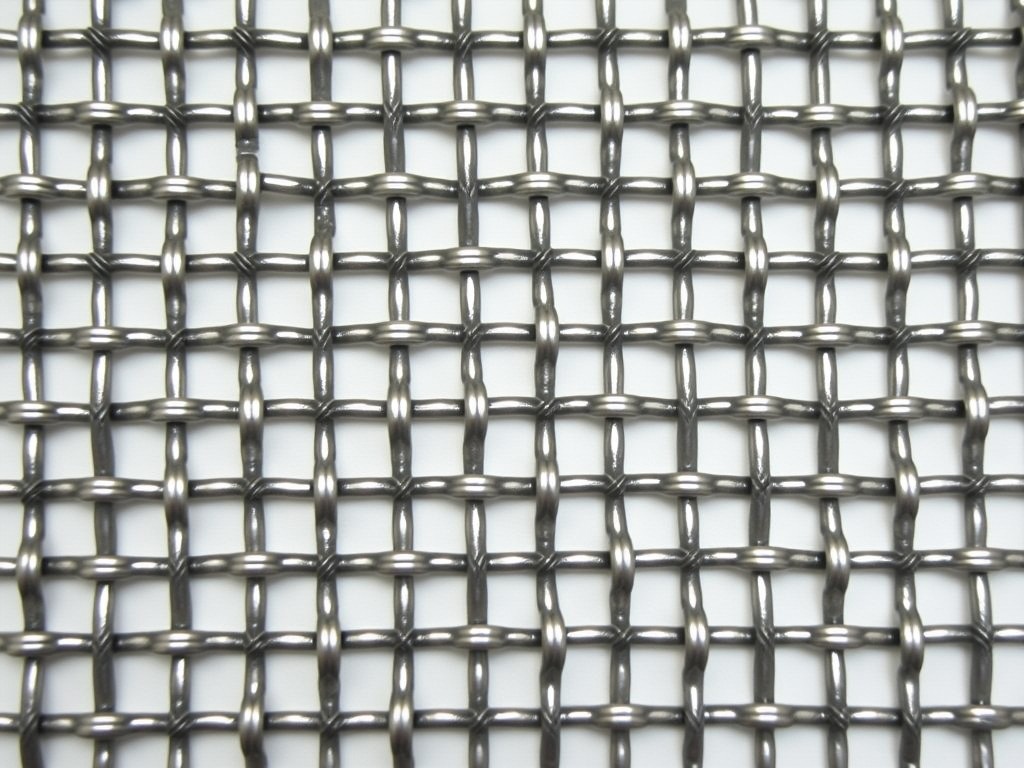
Stainless Steel Wire Mesh For Mosquito Netting
Stainless Steel Wire Mesh for Mosquito Netting
Stainless steel wire mesh for mosquito netting is engineered to provide a durable, corrosion-resistant barrier against insects while maintaining optimal airflow and visibility. Unlike synthetic alternatives, it offers long-term structural integrity in humid, coastal, or chemically exposed environments where degradation from UV, salt, or cleaning agents is a concern.
The mesh is fabricated from austenitic stainless steel grades such as 304 or 316, drawn into precise diameters and woven using plain or twill weave patterns to achieve consistent aperture sizes. This ensures uniform insect exclusion without compromising light transmission or ventilation efficiency in residential, commercial, or industrial enclosures.
Material Composition and Corrosion Resistance
Grade 304 stainless steel contains approximately 18% chromium and 8% nickel, forming a passive chromium oxide layer that resists oxidation in most atmospheric conditions. Grade 316 adds 2–3% molybdenum, significantly enhancing resistance to chlorides and making it suitable for coastal installations or areas exposed to frequent salt spray or cleaning with halogen-based agents.
The wire diameter typically ranges from 0.20 mm to 0.50 mm, depending on the required tensile strength and aperture size. Thinner wires improve transparency and airflow but reduce impact resistance; thicker wires increase durability for high-traffic or industrial barriers where mechanical stress is expected.
Aperture Specifications and Insect Exclusion Efficiency
Standard aperture sizes for mosquito exclusion range from 1.2 mm × 1.2 mm to 1.6 mm × 1.6 mm, based on the dimensions of common mosquito species such as Aedes aegypti and Anopheles gambiae. Apertures larger than 1.6 mm risk allowing passage of smaller biting insects, while smaller apertures reduce airflow and increase clogging potential in dusty environments.
The open area ratio—calculated as the percentage of open space relative to total surface area—typically falls between 60% and 75% for standard mosquito mesh. This balance ensures effective insect exclusion while maintaining sufficient air exchange for comfort in warm climates and reducing the load on ventilation systems in enclosed spaces.
Weave Patterns and Structural Performance
Plain weave is the most common configuration, where each warp wire alternates over and under each weft wire, producing a symmetrical, stable mesh with equal strength in both directions. This pattern resists skewing under tension and is ideal for rectangular frames where uniform load distribution is required.
Twill weave, in which each wire passes over two and under two adjacent wires, offers greater flexibility and drape, making it suitable for curved or irregularly shaped enclosures. While slightly less rigid than plain weave, it provides improved fatigue resistance under cyclic loading, such as in retractable or roll-up netting systems.
Comparison of Mesh Specifications
| Parameter | Typical Range | Notes |
|---|---|---|
| Wire Diameter | 0.20 – 0.50 mm | Selected based on tension requirements and aperture size |
| Aperture Size | 1.2 – 1.6 mm square | Optimized for exclusion of mosquitoes and small biting flies |
| Open Area Ratio | 60% – 75% | Balances airflow, visibility, and insect exclusion |
| Tensile Strength (Wire) | 500 – 800 MPa | Depends on grade and cold work level |
| Operating Temperature | -50°C to +400°C | Limited by oxidation resistance of stainless steel grade |
Surface Treatments and Finishing Options
The mesh is typically supplied in a mill finish, which preserves the natural passive oxide layer and avoids introducing contaminants that could initiate corrosion. For applications requiring reduced glare or improved aesthetic integration, electropolishing or passivation treatments are available upon request to enhance surface smoothness and further inhibit microbial adhesion.
Black oxide or polymer coatings are not standard for mosquito netting applications, as they may trap moisture, degrade under UV exposure, or alter the mesh’s dimensional stability. Any coating must be evaluated for compatibility with cleaning protocols and long-term environmental exposure to avoid delamination or clogging of apertures.
Applications in Residential, Commercial, and Industrial Settings
In residential construction, stainless steel mosquito mesh is commonly installed in operable windows, sliding doors, and ventilation grilles where long-term exposure to moisture, pollen, and routine cleaning necessitates a non-degrading barrier. Its inert nature ensures no off-gassing or staining of surrounding surfaces over decades of service.
Commercial facilities such as food processing plants, pharmaceutical cleanrooms, and hospitals use this mesh in air intake vents and containment barriers to prevent insect ingress while meeting hygiene standards. The non-porous, easy-to-clean surface supports compliance with ISO 14644 and FDA sanitation requirements, where synthetic meshes may harbor biofilms or degrade under disinfectants.
Industrial applications include enclosures for outdoor machinery, cooling tower louvers, and livestock housing, where resistance to chemical washdowns, UV degradation, and mechanical impact is critical. Unlike polyester or nylon alternatives, stainless steel maintains dimensional stability and tensile strength after years of cyclic thermal expansion and exposure to industrial atmospheres.
Customization and Supply Considerations
Mesh panels can be supplied in roll form for on-site cutting and framing or as pre-fabricated units with welded or bent edges for direct installation. Standard roll widths range from 0.8 m to 2.1 m, with lengths up to 30 m depending on wire diameter and spool capacity. Custom widths, lengths, and edge treatments are available to match specific framing systems or architectural profiles.
Framing compatibility is a key specification; the mesh must align with the groove depth, spline size, and fastening method of aluminum, PVC, or wooden frames. Mismatched dimensions can lead to sagging, disengagement, or uneven tension, reducing effectiveness and service life. Technical drawings or samples are recommended before finalizing dimensions.
Packaging options include polyethylene-wrapped rolls on cardboard cores or flat-packed panels in corrugated cartons with edge protection. For export shipments, moisture-barrier wrapping and corrosion-inhibiting vapors (VCI) are available to prevent surface staining during transit in high-humidity climates.
For technical consultation, sample requests, or quotations, please provide your required aperture size, wire diameter, grade preference, dimensions, and intended application. Our engineering team will review your specifications and respond with viable options, lead times, and compliance documentation.
Submit Inquiry