


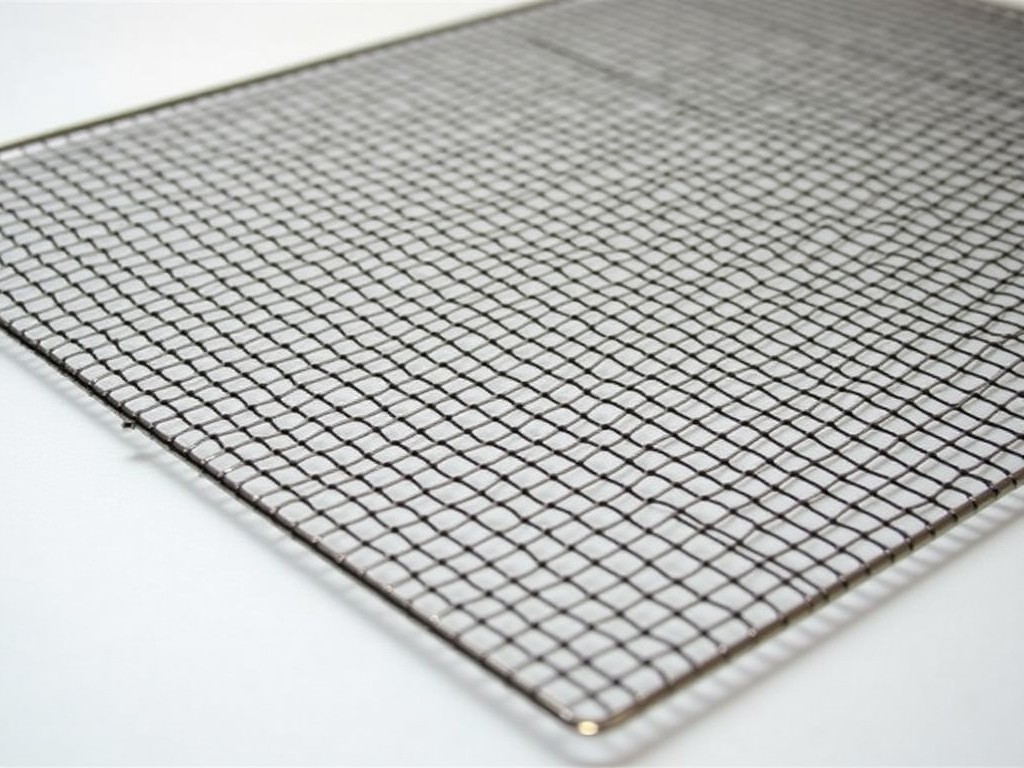
Stainless Steel Wire Netting Suppliers
Stainless Steel Wire Netting: Industrial Specifications and Supplier Considerations
Material Composition and Corrosion Resistance Fundamentals
Stainless steel wire netting derives its performance from alloy composition, primarily chromium and nickel content, which form a passive oxide layer that resists oxidation in ambient and mildly corrosive environments. Grade 304 (18% Cr, 8% Ni) provides adequate resistance for general industrial use, while Grade 316 (16% Cr, 10% Ni, 2% Mo) adds molybdenum to enhance pitting resistance in chloride-exposed settings such as marine or chemical processing areas.
Wire diameter directly influences tensile strength and open area percentage; for example, a 2.0 mm diameter wire in a 50 mm mesh achieves approximately 60% open area with a tensile strength exceeding 800 MPa for cold-drawn 304 stainless. These parameters are critical when specifying netting for load-bearing applications like machine guards or vibratory screening where deformation under static or cyclic loads must remain within elastic limits.
Surface finish—whether annealed, pickled, or electropolished—affects both corrosion initiation sites and cleanability. Electropolished finishes reduce surface roughness to below 0.4 µm Ra, minimizing particle adhesion in food or pharmaceutical environments, whereas a standard 2B mill finish suffices for architectural or general industrial barriers where aesthetics and ease of cleaning are secondary to structural integrity.
Mesh Geometry and Open Area Calculations
Mesh size is defined as the number of openings per linear inch, but industrial engineers more commonly specify clear opening (the distance between adjacent wires) and wire diameter to calculate open area percentage—a key factor in fluid dynamics, light transmission, and screening efficiency. For instance, a 4 mm clear opening with 1.6 mm wire yields approximately 36% open area, suitable for coarse filtration or debris containment where high flow rates are prioritized over fine particle retention.
Weave patterns—plain Dutch, twill Dutch, or reverse Dutch—alter flow characteristics and mechanical stability. Plain weave offers symmetrical strength in both warp and weft directions, ideal for uniform loading. Twill weave, where each wire passes over two and under two adjacent wires, provides greater tensile strength and finer filtration capability at the same nominal mesh count due to improved wire nesting and reduced wire movement under load.
Tolerance control in wire diameter and mesh spacing is essential for precision applications. Standard tolerances for wire diameter are typically ±0.05 mm, while mesh pitch (center-to-center wire distance) may vary by ±0.3 mm depending on weaving tension and post-processing. For applications requiring consistent filtration ratings—such as catalyst retention in chemical reactors—suppliers should provide inspection reports verifying dimensional stability across the full roll width.
Load-Bearing Capacity and Safety Factors
Deflection under uniform load follows beam theory principles, where maximum sag is proportional to the load per unit area and the fourth power of span length, inversely proportional to wire stiffness and mesh depth. For example, a 1 mm diameter wire net spanning 500 mm under 500 Pa pressure may deflect approximately 8 mm—acceptable for debris barriers but excessive for precision guarding. Increasing wire diameter to 1.6 mm reduces deflection to under 1.5 mm under the same conditions.
Surface Treatments and Hygiene Considerations
For applications involving high-temperature sterilization (e.g., autoclaving at 121–134°C), the netting must retain mechanical integrity and resist sensitization—chromium carbide formation at grain boundaries that occurs between 425–815°C and reduces intergranular corrosion resistance. Low-carbon grades like 304L or 316L, or stabilized grades such as 321 (titanium-stabilized), are preferred to prevent weld decay and maintain corrosion resistance after thermal cycling.
Customization Logic and Engineering Collaboration
Roll width and length are constrained by loom capabilities and handling logistics. Standard widths range from 0.5 m to 3.0 m, with custom widths achievable through edge slitting or multiple-panel splicing—though splicing introduces potential weak points and is generally avoided in structural applications. Lengths are typically limited to 20–50 m per roll for manual handling; longer lengths require mechanical spooling and are common in OEM integrations where the netting is fed directly into production lines.
Quality Assurance and Inspection Protocols
Non-destructive testing methods like eddy current scanning can detect surface cracks or thickness variations invisible to the eye, particularly valuable in high-stress components. For batch consistency, spectral analysis confirms alloy composition within ±0.05% for key elements like chromium and nickel, ensuring that material substitutions do not occur undetected. Burst or grab tensile tests on finished samples validate that cold-working levels meet design assumptions.
Application-Specific Selection Guidelines
For architectural facades or windbreaks, aerodynamic loading and vortex shedding become design considerations. Open area percentages above 60% reduce wind pressure coefficients, while wire diameters under 1.0 mm minimize visual obstruction. Stainless steel Grade 316 is commonly specified in coastal zones due to its resistance to salt-spray corrosion, with post-installation cleaning schedules factored into lifecycle cost analysis.
For technical consultation on material selection, mesh design, or custom fabrication requirements, contact our engineering team to discuss your project specifications.
Request Technical Support