


Stainless Steel Wire Panels Supplier
Stainless Steel Wire Panels Supplier
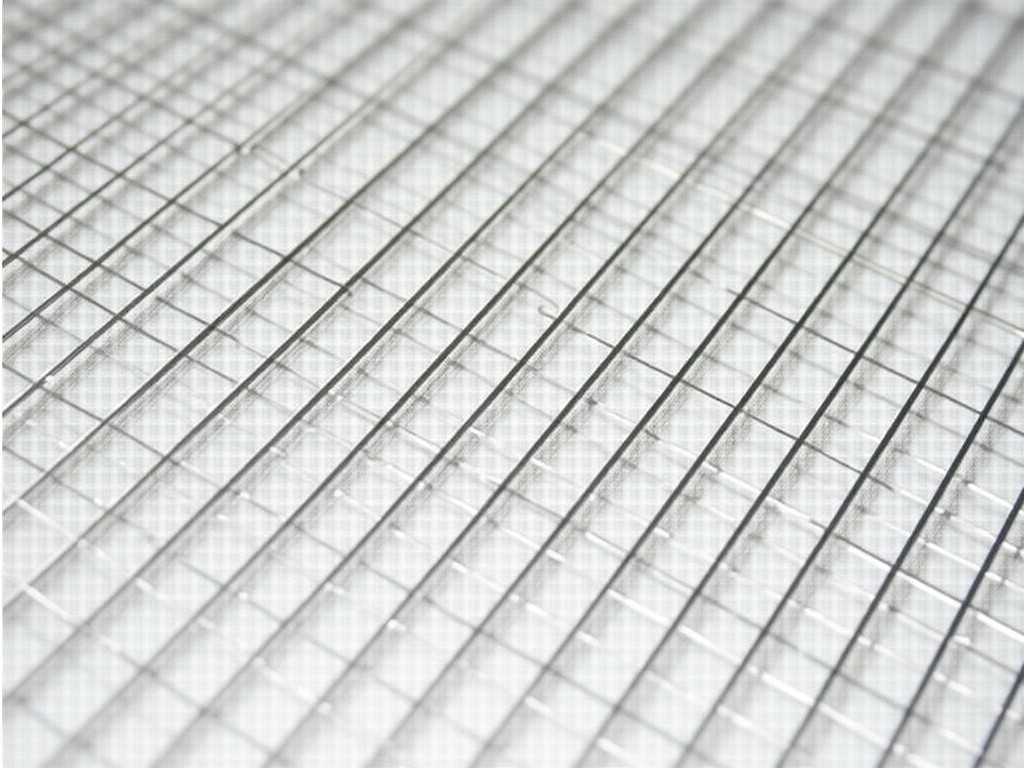
Stainless steel wire panels are engineered structural components formed by welding or weaving corrosion-resistant wire into open-grid configurations. These panels provide load-bearing capacity, drainage, and visibility while maintaining dimensional stability under environmental exposure. Industrial buyers select them for applications where material longevity, hygiene, and mechanical performance outweigh solid alternatives.
Material Composition and Grade Selection
The base material determines long-term behavior in service environments. Common grades include 304 for general indoor and mildly corrosive outdoor use, and 316 for chloride-rich or marine atmospheres due to molybdenum enhancement. Wire diameter typically ranges from 2 mm to 8 mm, influencing tensile strength and open area percentage. Panel stiffness scales with wire size and mesh density, allowing engineers to match rigidity to expected loads without over-specifying.
Manufacturing Process and Structural Integrity
Production begins with precision-drawn stainless steel wire, straightened and cut to length. Welded panels use resistance spot welding at each intersection, creating a homogeneous joint that matches parent wire strength. Woven variants interlace warp and weft wires, then crimp edges to prevent unraveling. Post-weld treatments include passivation to remove free iron and restore chromium oxide layer integrity. Dimensional tolerances are held to ±3 mm on length and width, with squareness verified via diagonal measurement.
Open Area and Flow Characteristics
Open area percentage directly affects airflow, light transmission, and fluid drainage. A 50 mm × 50 mm square mesh with 4 mm wire yields approximately 64% open area, while a 25 mm × 25 mm mesh with same wire drops to 36%. Engineers use this metric to calculate pressure drop across panels in HVAC guards or to size drainage capacity in trench covers. Surface roughness of the wire influences fouling tendency; smoother draws reduce particulate adhesion in food processing zones.
Load-Bearing Capacity and Deflection Limits
Load capacity depends on span, support conditions, wire diameter, and mesh pattern. A simply supported panel with 5 mm wire, 50 mm pitch, and 1000 mm span typically deflects less than 3 mm under a 1.5 kN/m² uniform load—suitable for pedestrian walkway infill. Point loads require local reinforcement or reduced spacing between supports. Finite analysis is recommended for dynamic or impact scenarios, as wire panels exhibit nonlinear stiffening under large deflection due to membrane action.
Surface Finish and Edge Treatment Options
Finishes extend beyond base passivation. Electropolishing removes microscopic peaks, achieving Ra values below 0.4 µm for sanitary compliance in pharmaceutical areas. Beveled or rolled edges eliminate sharp corners where panels interface with framing or personnel. For architectural applications, directional brushing creates uniform aesthetics while maintaining corrosion resistance. Coatings such as PVD are rarely applied to stainless wire panels due to adhesion challenges on cylindrical surfaces and cost inefficiency versus grade selection.
Typical Industrial Applications
In wastewater treatment, wire panels serve as coarse bar screens where 6 mm wire at 75 mm spacing captures debris without blinding, leveraging high open area for self-cleaning during flow surges. Food processing facilities use 316L panels with 3 mm wire and 20 mm mesh as conveyor belt guards—small enough to prevent finger entry, large enough for spray-down access, and resistant to daily caustic washdowns. Architectural facades employ flattened wire grids as sunshades; the 50% open area reduces solar gain by 30–40% while preserving outward visibility, validated through daylight modeling.
Customization Parameters and Engineering Support
Customization begins with defining load cases, environmental exposure, and required service life. Clients provide span dimensions, support layout, and expected uniform or concentrated loads. Wire diameter, mesh opening, and edge treatment are then selected to meet deflection limits under worst-case load combinations. For curved or tapered panels, wire is pre-formed during drawing or panels are segmented with overlapping flanges. Documentation includes material test reports, weld procedure specifications, and inspection records upon request.
Quality Control and Inspection Protocols
Inspection starts with raw material certification verifying chemistry and mechanical properties. In-process checks include wire diameter sampling, weld penetration visibility (minimum 50% thickness), and dimensional verification at first article and every 50th panel. Final inspection confirms squareness, edge flatness, and absence of sharp edges. Surface cleanliness is evaluated via water break test or wipe test for particulate in critical zones. Non-destructive methods like dye penetrant are applied to welds in pressure-rated or safety-critical installations.
Packaging, Handling, and Logistics Considerations
Panels are stacked flat on pallets with corner protectors and separated by corrugated sheets to prevent abrasion during transit. Bundles are secured with polyester strapping rated for outdoor exposure. For panels exceeding 2000 mm in length, vertical A-frame racks reduce bending risk. Export shipments include desiccant bags and vapor-corrosion inhibitors in humid climates, though stainless steel’s inherent resistance often makes additional protection unnecessary. Marking includes part number, heat number, and QR code linking to material certificate.
Comparison: Welded vs. Woven Wire Panels
| Characteristic | Welded Panel | Woven Panel |
|---|---|---|
| Joint Strength | Matches wire tensile strength | Dependent on crimp and interlock |
| Dimensional Stability | High; resists racking | Moderate; can distort under uneven load |
| Surface Smoothness | Slight protrusions at welds | Continuously smooth surface |
| Repairability | Limited; requires re-welding | Wires can be re-woven if accessible |
| Typical Use Case | Structural guards, flooring infill | Filtration, architectural screens |
Environmental and Lifecycle Factors
Stainless steel wire panels contribute to lifecycle cost savings through minimal maintenance. Unlike coated carbon steel, they do not require repainting or touch-up welding in atmospheric exposure. At end-of-life, the material is 100% recyclable without downcycling, supporting circular economy goals in LEED or BREEAM projects. Energy intensity in production is offset by service lives exceeding 25 years in most industrial environments, reducing replacement frequency and associated downtime.